A Story of Hope Beyond Medical Limits
One moment changed everything.
At just 38 years old, an active and independent man suffered a severe spinal cord injury that left him fighting for his life. What followed were months inside the intensive care unit, surrounded by monitors, machines, and uncertainty.
He could no longer breathe without a mechanical ventilator.
Every breath depended on a machine. Every conversation with family carried the weight of unanswered questions. Doctors had prepared his loved ones for the possibility that he might never breathe on his own again.
For many, this would have been the end of the story.
For Dr. Manish Baldia, it was the beginning of a new possibility.
When Conventional Medicine Reaches Its Limits
Spinal cord injuries can affect far more than movement.
When the nerves responsible for breathing are damaged, patients often become completely dependent on ventilators. Along with the inability to breathe naturally comes the loss of independence, communication, confidence, and in many cases, hope itself.
Most patients are told to adapt to life with permanent ventilator support.
But advances in Functional Neurosurgery are changing what is possible.
A Historic First for India
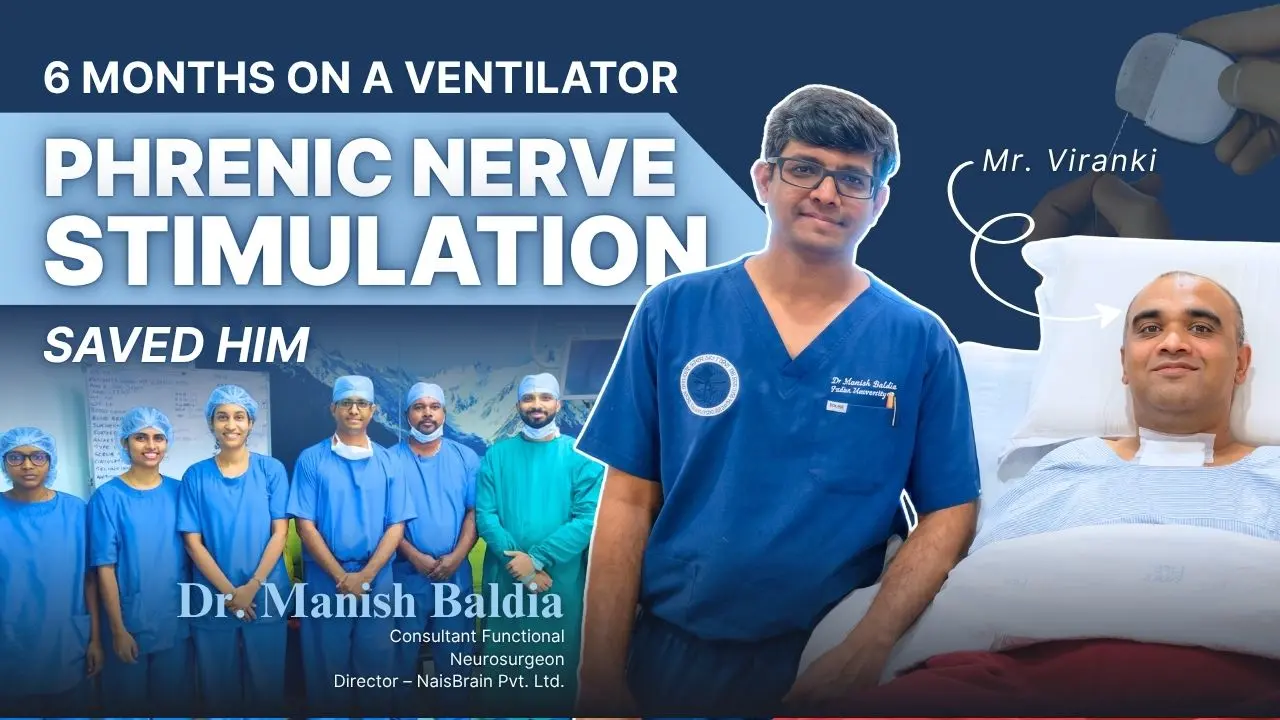
Driven by innovation and years of expertise in Functional Neurosurgery, Dr. Manish Baldia performed India’s first Combined Phrenic Nerve Stimulation and Sacral Stimulation procedure.
This groundbreaking approach was carefully planned to restore critical body functions that had been lost after spinal cord injury.
Instead of accepting permanent dependence, the focus shifted toward giving the patient’s body an opportunity to function again.
It was a challenging procedure requiring advanced neurosurgical precision, multidisciplinary planning, and unwavering determination.
It represented not just another surgery—but a new chapter in Indian Functional Neurosurgery.
Understanding the Procedure
Phrenic Nerve Stimulation
The phrenic nerves control the diaphragm—the primary muscle responsible for breathing.
By electrically stimulating these nerves, the diaphragm can once again contract naturally, allowing patients to reduce or even eliminate dependence on mechanical ventilation in carefully selected cases.
Potential Benefits
- Improved natural breathing
- Reduced ventilator dependency
- Better lung function
- Improved quality of life
- Greater independence
Sacral Stimulation
Sacral nerve stimulation targets the nerves responsible for bladder, bowel, and certain pelvic functions.
For patients with spinal cord injuries, restoring these functions can dramatically improve everyday life, dignity, and overall well-being.
Potential Benefits
- Better bladder management
- Improved bowel control
- Enhanced daily independence
- Better overall quality of life
The Moment That Changed Everything
Recovery did not happen overnight.
It required patience.
Rehabilitation.
Careful programming of the stimulation devices.
Consistent medical follow-up.
Slowly, something remarkable began to happen.
The ventilator that had once been essential became less necessary.
The patient started breathing independently.
Then came a moment no one in the room will ever forget.
He began to speak.
And eventually…
He sang.
A voice that had been silenced by injury returned—not because of a miracle alone, but because medical innovation met determination, expertise, and hope.
More Than a Medical Success
This was never only about breathing.
It was about giving someone their life back.
Being able to communicate with loved ones.
Sharing meals without fear.
Leaving the intensive care unit.
Looking toward the future instead of living in uncertainty.
For the patient and his family, it marked the return of possibilities they thought had been lost forever.
Why This Achievement Matters
India’s first combined Phrenic Nerve Stimulation and Sacral Stimulation procedure represents a significant milestone in Functional Neurosurgery.
It demonstrates that carefully selected patients with complex spinal cord injuries may have advanced treatment options beyond long-term supportive care.
While every patient’s condition is different and outcomes vary, this case highlights how modern neuromodulation techniques can open new pathways for recovery that were once considered impossible.
Could This Treatment Help You or Your Loved One?
Patients who may benefit from advanced neuromodulation include those with:
- High cervical spinal cord injuries
- Ventilator dependency due to nerve injury
- Diaphragm paralysis
- Neurogenic bladder or bowel dysfunction
- Complex neurological conditions requiring functional restoration
Every patient requires detailed evaluation to determine whether these procedures are appropriate.
Meet Dr. Manish Baldia
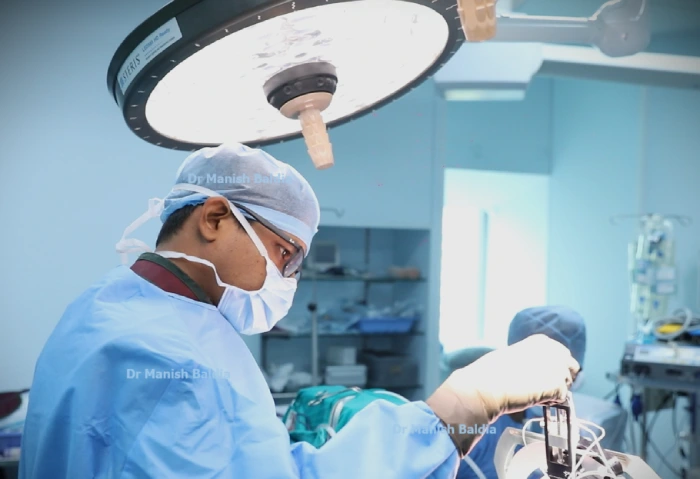
Dr. Manish Baldia is a leading Functional Neurosurgeon in Mumbai with expertise in advanced neuromodulation and complex neurological procedures.
His focus is not only on treating disease—but on restoring function, independence, and quality of life through cutting-edge neuroscience.
With every patient, the goal remains the same:
To find possibilities where others see limitations.
Watch the Inspiring Journey
Witness the incredible transformation of a patient who went from complete ventilator dependence to breathing independently and finding his voice again.
Every Great Recovery Begins with a Conversation
If you or someone you love is living with the effects of a spinal cord injury or neurological condition, advanced Functional Neurosurgery may offer treatment options worth exploring.
No two patients are the same.
The first step is understanding what is possible.
Book a Consultation with Dr. Manish Baldia
Discover whether advanced neuromodulation therapies such as Phrenic Nerve Stimulation or Sacral Stimulation could be suitable for your condition.


